-
Lars Veenstra
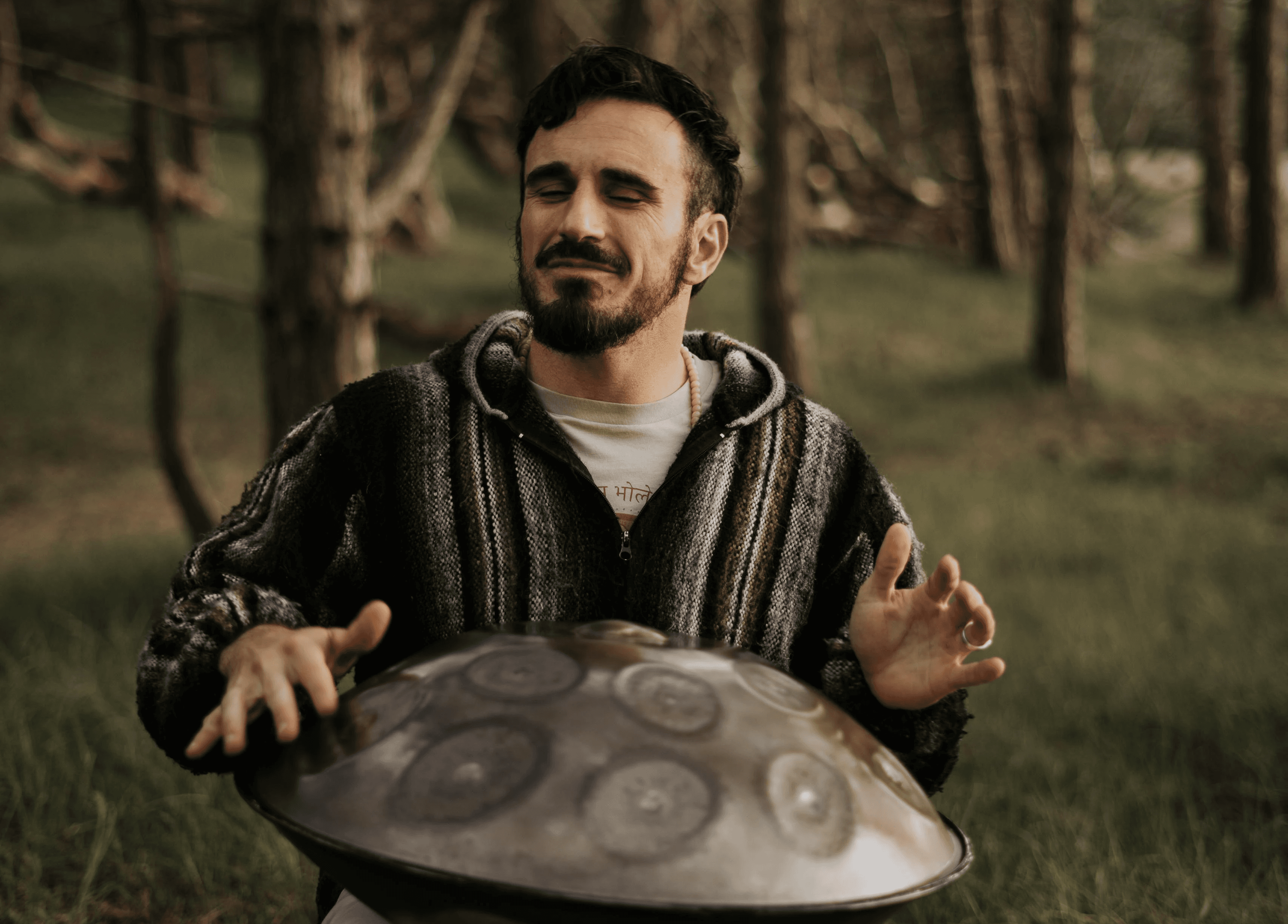
from my podcast with Crue Kopecky
1. Most of us breathe in a pattern signaling danger
Crue explains that shallow, chest-based, mouth breathing is interpreted by the nervous system as a threat signal. Since breath and nervous system form a feedback loop, this means many of us spend our days quietly telling our bodies we are unsafe. The correction is not complicated: breathe through the nose, breathe lower into the body, and lengthen the exhale. For most people, a single guided session opens a door that never fully closes again.
2. Your shadow is simply what you never explore
Crue offers a refreshingly unmystical definition: your shadow is not necessarily monstrous, it is just the part of the sphere the sun does not reach. For a chaotic person, structure is the shadow. For a rigid person, chaos is. Most of what lives there is not frightening at all, it is simply unfamiliar and complementary to how you already operate.
3. You need all frequencies of life to really enjoy it
After a devastating first relationship, Crue swung from complete selflessness to complete self-focus, and only through experiencing both extremes could he see the whole plane he was operating on. He uses the guitar string as the image: attached at only one end there is no tension and no sound. It is the connection to both poles, meeting in the middle, that produces music. The extremes are not failures. They are how you find the centre.
4. Play is the fastest route back to yourself
Music, Crue notes, is one of the only things adults still explicitly call “playing.” The reason children learn instruments faster is not neurological, it is that they have not yet learned to care what others think. He watched this happen to himself as a child when his parents told him to stop playing a flute, and he internalised it and stopped. The invitation is to give yourself permission to be a bit annoying, a bit obnoxious, for as long as it takes to make something beautiful.

5. Turn what is habitual into ritual
This is Crue’s central motto. Rather than trying to eliminate habits through willpower, he brings intention to them so they become something you consciously enter rather than something that runs you. His mala, his morning breath class, his mantra practice, even his relationship with cannabis are all governed by this principle. Breath is the ultimate example: the thing you already do twenty thousand times a day, made deliberate.
6. Bliss is any emotion fully felt, including grief
Crue cites the idea that bliss is not a specific pleasant emotion but any emotion experienced completely. A truly good cry, one where you let everything out, is among the most blissful experiences available to a human being. Lars describes exactly this happening during fascia work in Egypt, when releasing the stored fear and grief from a near-fatal accident opened into overwhelming gratitude for being alive.
7. Build the container before you let the fire burn
When Crue feels rage, self-pity, or despair, he does not suppress it and he does not let it consume everything around him. He describes building a lantern or a fire pit first, doing the conscious work in calmer moments so that when the fire comes it can burn as high as it wants without destroying anything. The distinction that matters: if the dark impulse would harm someone else’s freedom or safety, that is where transmutation is needed rather than expression.
8. Perfection is finding beauty in the mess of it all
In his first ayahuasca ceremony, Crue was shown his own hands. Closed, they appeared symmetrical and perfect. Opened, they revealed asymmetry, one pinky longer, lines running in different directions, one palm coherent and the other chaotic. The teaching was that this plane, this life in the three dimensional world, is not built for perfection. Perfection here means doing the best with what you were given, and finding beauty in the asymmetry rather than waiting for a symmetry that will never come.